The 4-step process of legal research—issue analysis, consulting secondary sources, searching for codified law, and locating relevant case law—provides a structured approach to finding and interpreting the law. This process ensures that researchers thoroughly understand the legal issues at hand, access comprehensive background information, and find the most relevant and current legal authorities. Having a systematic process is crucial because it helps maintain accuracy, efficiency, and reliability in legal research, ensuring that conclusions are well-founded and that the legal advice or arguments developed are based on solid legal principles and up-to-date information.
Step 1 of the 4-step legal research process is the Issue Analysis
Step 1 involves carefully examining the facts of the case or situation to identify the legal issues at hand. Researchers must determine the specific questions of law or legal principles that need to be addressed. This step also includes mapping out what information is necessary to resolve these issues and planning the overall research strategy, including identifying the potential sources and jurisdictions that will be relevant.
Your issue analysis serves as a crucial starting point in the research process and is essential for ensuring you can:
Understand the Issue: Before beginning legal research, you must clearly comprehend the legal issue or problem at hand. You will define the problem's parameters, ensuring that your research is directed toward relevant considerations.
Identify Key Facts: You should identify and analyze significant facts associated with the legal issue. These facts help to establish the context and scope of the legal problem, aiding in later stages of your research.
Define Legal Issues: Legal issues emerge from the facts and circumstances of a case. The preliminary analysis step involves identifying the legal questions that need to be addressed, which will guide you toward the relevant legal principles.
Identify Potential Causes of Action: You need to identify and evaluate possible causes of action that may arise from the facts.
Determine Jurisdiction: Depending on the nature of the issue, jurisdictional considerations may play a crucial role. Thus, you need to determine the relevant jurisdictions where laws and regulations apply.
Extract Relevant Terms: As you analyze the problem and associated issues, you will naturally encounter relevant terms, concepts, and phrases that are intrinsic to the legal context. These terms can become essential keywords and phrases.
Formulate Research Questions: Your preliminary analysis aids in formulating specific research questions. These questions often incorporate terms that are integral to the legal issue.
Develop a Research Plan: Your preliminary analysis informs the creation of a research plan. It helps you to outline the steps you need to take, the primary and secondary sources you need to consult, and the methods you need to employ to address the legal issue effectively.
Avoid Wasted Efforts: Effective preliminary analysis prevents you from pursuing irrelevant research paths, thereby saving you time and effort. It ensures that your research is focused and aligned with the legal issue's core components.

By working through the "who, what, when, where, why" questions relating to the legal issue at hand, you will learn to systematically assess a problem's various facets; and develop the skills needed to identify crucial information, establish the foundation for your research strategy, and ultimately make informed decisions about the resources you consult.
Overall, the issue analysis step forms the foundation of effective legal research. It enables you to approach your research tasks with clarity, purpose, and a structured plan, thereby enhancing the efficiency and quality of your research.
There are many guidance documents that can be used to work through your issue analysis and develop your research plan. Below are just a few examples. We encourage you to explore these and other research planning documents to find what works for you!
There are multiple reasons legal researchers should seek out relevant secondary sources:
1. Secondary sources provide background info and help explain the law.
Secondary sources provide an overview of how statutes, regulations, case law, and other authority interface together with your legal issue.
2. Secondary sources lead you to relevant primary sources.
Secondary sources will include citations to primary authority on which you can rely (but see Limitations below). Depending on the source, you may find citations to primary authority that is binding in your jurisdiction.
1. Secondary sources generally provide a broad overview and may not include everything you need for your research.
Instead of relying solely on the secondary source as a source, go to the relevant citation's source for more information.
2. Secondary sources can be outdated and may not address all relevant sources.
Although secondary sources are updated regularly, law can always change before an update. Check the date of any secondary source. Check any primary sources cited to ensure they are still good law.
Do not rely solely on a secondary source. Always check the primary source material!
Consider what secondary sources may be most helpful in researching your topic. If you are looking at Texas law, make sure you consult Texas encyclopedias, for example. If you are dealing with a long-established area of law, consider consulting Treatises or Hornbooks that will provide you with background into the development of your legal issue.
Each page under the Secondary Sources tabs at left will provide some information on each type of secondary source. Refer to these as you proceed with your research to find new potential sources to consider or when need a refresher on what each source includes.
Ultimately, remember that secondary sources are not law. They discuss and interpret the law, but you should always rely on the actual source material for your research.
Legal dictionaries are useful in your research, but they also come with caveats:
Black’s Law Dictionary
Considered the reference of choice for terms in legal briefs and court opinions, and has been cited as a secondary legal authority in many U.S. Supreme Court cases.
Black's is available on Westlaw. It is worth noting that the print version of Black’s Law Dictionary includes topics and key numbers, so students can find cases related to the defined word's topic.
Prince's Bieber Dictionary of Legal Abbreviations
Contains an extensive range of acronyms, abbreviations, and symbols found in reporters, legal treatises, law reviews, law dictionaries, and other selected documents, provided in both forward and reverse order.
Bieber's Dictionary is available as a hard copy in the Law Library.
Ballentine’s Law Dictionary
This dictionary contains brief definitions of legal terms without any long historical or explanatory data. Some terms will have citations to the original source material. Ballentine's is available on Lexis, although it is no longer being updated.
Words & Phrases
Contains judicial definitions, from both state and federal courts, from both published and unpublished opinions. Definitions may pertain to statutory language, court rules, administrative regulations, or business documents, among other sources. Each definition contains a citation from the court that provided the definition.
Each definition is also classified by West's attorney-editors to the West Key Number System, wherever possible. New judicial constructions and interpretations of words and phrases are promptly supplied as they become available from the courts.
Words & Phrases is available on Westlaw.
 Prince's Bieber Dictionary of Legal Abbreviations
by
Prince's Bieber Dictionary of Legal Abbreviations
by
 Ballentine's law dictionary, with pronunciations.
by
Ballentine's law dictionary, with pronunciations.
by
Access on Westlaw and Lexis
Additionally, to access these dictionaries on Westlaw and/or Lexis, filter your search to Secondary Sources and then run your search, or go to the Secondary Sources content pages to find the page for specific source you're after.
Treatises
These sources are widely-respected works written by scholars or experts in the field that are considered definitive sources within their subject area. As a result, you may find them cited in court opinions, briefs, and memos.
Treatise titles will often be in the format "[author name] on [subject matter]."
Hornbooks
These are still authored by scholars who are experts in the topic area of law, but are written more for a student and practitioner audience.
Nutshells
Most commonly used by students as a study aid, they give a quick overview of the law—fewer references to primary authorities. They may follow an outline type of format.
Others
All of the electronic databases have varying secondary sources, so it’s useful to check each to find a good treatise on your topic. Try searching for secondary sources and narrowing down by topic.
 Nimmer on copyright
by
Nimmer on copyright
by
Texas Jurisprudence (Tex. Jur.)
A comprehensive statement of Texas law in the light of current authorities and modern developments. The encyclopedia contains more than 400 separate titles on a broad range of legal topics which, taken together, systematically describe the entire field of Texas legal doctrine. TexJur is available on both Westlaw and Lexis.
Corpus Juris Secundum (C.J.S.)
Corpus Juris Secundum is a legal encyclopedia covering nationwide state and federal legal topics. The CJS database is updated weekly with relevant new statutory, rule, regulation, and case notes, and monthly with topics revised during the month. CJS is available on Westlaw.
American Jurisprudence (Am. Jur.)
An encyclopedia containing over 400 separate titles on a broad range of legal topics. Like CJS, it has a nationwide coverage. AmJur is available on Lexis and Westlaw.
 Texas jurisprudence 3d
 Corpus juris secundum
 American jurisprudence 2d
American Law Reports (ALR) are smaller, but in-depth annotations or articles about specific legal topics. These annotations will include summary and analysis for the specific area of law, as well as citations to multi-jurisdictional primary and secondary sources. An ALR annotation on your topic is an excellent resource because it will save you a lot of time researching for additional materials. The annotations are often more detailed than encyclopedia entries. However, unlike encyclopedia entries, ALR annotations do not exist for every legal topic. They are focused more so on unsettled, controversial, or developing legal issues.
ALRs are organized into series, including numbered and federal series. There exists the 1st through (current) 7th series as well as the federal 1st through (current) 3rd series. Entries in the different series are easily located via index. ALRs are available on both Westlaw and Lexis. When searching in print, use the index volumes to locate annotations/topics in both the regular and federal-numbered series.
Law journals and law reviews are regularly-published issues containing articles written by practitioners, professors, and even students about various legal topics. These articles are in-depth explorations of the author's chosen topic in an academic article format. They contain extensive citations to a variety of different primary and secondary sources. Different journals will have different coverage of legal topics; they may be general interest publications or cover a specific type of law.
Other types of more formal publications include state or national bar association magazines, trade publications, and other legal organization publications. These types of publications will generally be shorter and not as thorough as traditional law journal articles. They are aimed at practitioners and often deal with current topics.
Journal articles are a great way to find citations to sources that are relevant to your legal issue. Because journal articles are comprehensive studies of a problem in the law that undergo an editing process, you can cite to them for their ideas when citations to publications are appropriate. However, journal articles are not the law. They will often propose solutions to legal issues or discuss potential outcomes to novel legal controversies, but they are at best a persuasive source. Be sure to go to the cited case law/primary authority for sources you can rely on.
Additionally, although journal articles undergo an editing process, often by student editors on a law school journal, journal articles are not updated in the way that encyclopedias and other secondary sources are. ALWAYS check that the source material referred to in the journal, as well as the overarching article premise, is still good law or has not been negatively treated. Journal articles are a great way to find creative legal arguments and propositions, but you need to do your due diligence to ensure that those same ideas are still worth citing.
Journal articles are available on Westlaw, Lexis, HeinOnline, the TTU Law Library catalog, and Bloomberg. Additionally, you may be able to find them through Google/Google Scholar and the website of the journal that published the article.
Restatements are scholarly and authoritative publications that summarize and discuss the common law of a particular topic in the United States as well as any relevant statutory elements. These are national in coverage. Restatements are primarily addressed to courts and discuss legal issues by presenting the state of the law as well as how it may be interpreted by those same courts.
The individual Restatement volume will indicate what legal area it covers (e.g., Restatement of the Law Third, Agency is the third Restatement volume dealing with the law of agency). All Restatements are published by the American Law Institute (ALI). Restatements are drafted by groups of judges, practitioners, and academics who are selected by the ALI on account of outstanding achievement.
Restatements are authoritative and thorough publications that may be cited wherever citing secondary sources is appropriate. Looking across the spectrum of secondary sources, Restatements are some of the most reliable. However, Restatements are NOT controlling. They are very persuasive, but only persuasive. Do not cite to a Restatement as a controlling or binding authority; always cite to the source material cited within the Restatement.
- Note that on both Lexis and Westlaw, you can also filter to Restatements after running your search.
See the ALI website for a list of all current Restatements

Practice aids and form books are resources targeted to practitioners. These materials provide templates and checklists, cover elements of legal issues, help practitioners draft common documents, and more. They are practical, how-to sources. Practice aids and form books will often be tailored to specific jurisdictions.
Practice aids and form books are available online on Lexis and Westlaw as well as in print. Popular Texas materials include O'Connor's and Dorsaneo's. You will also often find materials published by Matthew Bender; the State Bar of Texas; and other bar associations, sections, and groups.
Law school teaches students how to "think like a lawyer," but it sometimes does not convey the practical, how-to side of practicing law. Practice aids help fill this gap by explaining how to do actual legal work. To this end, look for practice aids specific to your jurisdiction and area of law. You will want to ensure that the content is controlling in your jurisdiction.
Not every practice aid will be the same. If you have access to practice aids from multiple publishers, consider looking at more than one to review any similarities or differences. Keep in mind the characteristics of your task as well-- are you putting together something that is more repetitive and standardized or something that requires more tailoring for your client?
Most importantly, remember that practice aids and form books are a starting place for your work, not an ending place. They provide helpful guidelines and templates, but are not necessarily what you should be filing with a court or sending to opposing counsel. Always make sure that you adapt these materials to your client's specific situation. Practice materials do not come tailored to what your client needs or wants!
Following are links to Westlaw and Lexis content pages for some common practice aids and form books.
Texas Practice Series on Westlaw


Step 3 focuses on finding the relevant codified law (such as statutes or regulations) that govern the legal issues identified. Researchers can use several methods to find codified law, including using the table of contents, indices, popular names table, and more. It is essential to ensure that you find the most current version of the law and verify that it is still in effect using citators to check for amendments or repeals that may impact the law’s validity.
Codification is the process of collecting and restating the law of a jurisdiction in certain areas, usually by subject, forming a legal code, i.e., a codex (book) of law. Codified law consists of constitutions, statutes, regulations, and court rules. These documents are primary sources of law and act as the highest mandatory authority a court must follow (where applicable).
Well, because the US Constitution, for instance, is the supreme law of the US. Judicial opinions interpret the US Constitution. The same can be said for state constitutions. They're the supreme law of that state (unless preempted), and judicial opinions interpret the state constitution. Even many appellate decisions involve the application of statutes, and judicial opinions only interpret those statutes.
But what about common law? Common Law is only applied by courts when there's no controlling statutes, and even so, legislatures (especially state legislatures) often incorporate common law rules into legislation for permanence.
Slip Laws: The first step of a statute becoming a law, printed on a pamphlet and not yet codified. Only start your research here if the law is very, very recent.
Session Laws: The second step of a statute's life cycle, still not yet codified. Here, the slip laws are organized chronologically and "bound" together (federally, in the Statutes at Large). Only start your research here if the law is very recent.
Code: The official codification of the law, and easier to use than slip laws and session laws, but it's only the letter of the law with no additions.
Annotated Code: Just like the previous code, but filled with extra annotations that can help you find more relevant information like history, cases, etc. Start your research here if possible.
You can find a free version of the US Code here (provided by the US Office of Law Revision Counsel), though it isn't annotated and is only the letter of the law. You can find a free, un-annotated version of the Texas Code here (provided by the Texas Legislature). For annotated codes, you'll most likely find these on paid subscription services like Westlaw and Lexis. You should start your research with annotated codes if possible, but always remember to cite to the un-annotated version of the code.
Annotations can be found on both Westlaw and Lexis within each code section, on the toolbar either just above or just beneath the title of the code section. The annotations are most often condensed into drop-down menus entitled "History", "Citing References", or "Citing Decisions".
Historical & Statutory Notes: References to other/older versions of the law, amendments that affect the statute in question, or other documents referencing the history of the statute's construction.
Cross References: References to other parts of the same code, usually explaining nuances like definitions or interpretations of phrases.
Notes of Decisions: Concise summaries that capture key points or rulings made by a court in cases interpreting the statute. These provide valuable insights into how a codified law has been interpreted, applied, and clarified by the courts.
Administrative Code References: References to other administrative codes, usually state agency rules (like the Texas Administrative Code).
Research References: Extra references that help explain the statute, usually secondary sources that can explain the interpretations of the statute and point out further important information or lead you to more statutes and cases.
Table of Contents: On both Westlaw and Lexis, there is a table of contents button on the top left of the document screen. Sometimes you'll search for a particular statutory section and find that the answer you're looking for is in a different part of the statute. The table of contents can help you browse through the statute's sections easily, so you can find context or definitions without struggle. You can use the table of contents to browse the entire code, to browse each title of a code, or even specific parts of a chapter.
Index: Westlaw has created dozens of indices for federal and state statutory codes. For example, when you click into "Statutes", and then "United States Code Annotated (USCA)", and then the light blue shaded toolbar labeled "Tools & Resources" at right, you'll see "Index - USCA". This will take you to the USCA Index, where you can browse through different code sections using keywords and basic concepts.
Popular Names Table: Westlaw also has compiled lists of the popular names of acts, including both the short title of the act and its popular colloquial names (e.g., Affordable Care Act = Obamacare) at both the state and federal level. You can find the Popular Names Table in the same "Tools & Resources" section indicated in the paragraph above.
Advanced Searching: Both Westlaw and Lexis support Boolean (terms & connectors) searching, and both have advanced searching to help you create a narrowed search. These advanced search forms can be accessed by using the "Advanced Search" function to the right of the main search bars.
Understanding the publication process for regulations helps in locating regulations at different points in time because it provides insight into the sequence of steps involved in the regulatory lifecycle. This helps us in accessing historical archives, tracking changes, and identifying specific versions or iterations of regulations by following their publication, amendments, and repeal processes.
Final Regulations: The second step of a regulation's life cycle. They are now official law, not yet codified. Here, the final regulations are also on Federal or State Register. Only start your research here if the law is very recent.
Code: The official codification of the law, and easier to use than finding enacted regulations in Federal or State Regesiter.
You can find a free version of the Federal Code of Regulations here, though it isn't annotated and is only the letter of the law. You can find a free, un-annotated version of the Texas Administrative Code here. For annotated codes, you'll most likely find these on paid subscription services like Westlaw and Lexis. You should start your research with annotated codes if possible, but always remember to cite to the un-annotated version of the code.
Authority note: It provides the source of legal authority for the information presented. This note typically includes citations to statutes, regulations, court cases, legal precedents, or other legal materials that substantiate the information or argument being made. It helps in verifying the accuracy and legitimacy of the information presented in legal documents.
Source note: It is the annotation or comment that provides additional information about the origin, context, or background of the legal material. It might include details about the publication, legislative history, amendments, or other relevant information about the source material cited. Source notes aim to offer readers more comprehensive knowledge about the legal sources being referenced, aiding in a deeper understanding of the legal context or history related to the information provided.
Table of Contents: On both Westlaw and Lexis, there is a table of contents button on the top left of the document screen. Sometimes you'll search for a particular regulatory section and find that the answer you're looking for is in a different part of the regulation. The table of contents can help you browse through the regulation's sections easily, so you can find context or definitions without struggle. You can use the table of contents to browse the entire code, to browse each title of a code, or even specific parts of a chapter.
Index: Westlaw has created dozens of indices for federal and state regulatory codes. For example, when you click into "Regulations", and then "Code of Federal Regulations (CFR)", and then the light blue shaded toolbar labeled "Tools & Resources" at right, you'll see "IIndex - CFR". This will take you to the CFRIndex, where you can browse through different code sections using keywords and basic concepts.
Advanced Searching: Both Westlaw and Lexis support Boolean (terms & connectors) searching, and both have advanced searching to help you create a narrowed search. These advanced search forms can be accessed by using the "Advanced Search" function to the right of the main search bars.

For a zoom-friendly version of this image, click here.
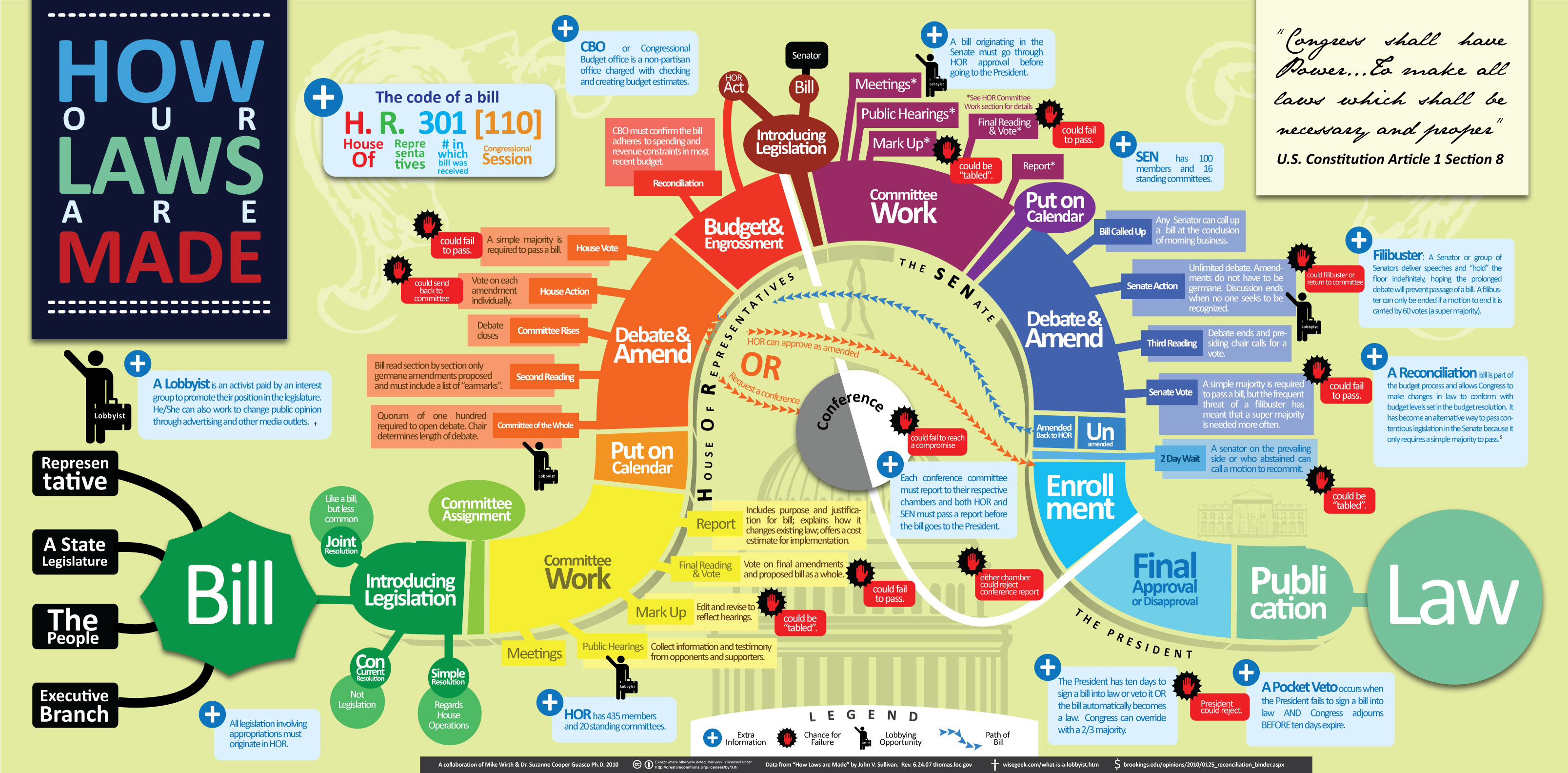
A Legislative History is the multitude of documents produced by the congressional lawmaking process, including everything created from bill introduction to the enactment of the resulting law. This includes many different document types and formats, such as committee hearing documents, voting records, floor debate transcriptions/recordings, presidential messages, and more. These documents can be used in many ways, but are most often used to interpret statutory language, as litigation outcomes can be determined by the evaluation of legislative history documents.
This breadth of information makes this research feel tedious and unmanageable, so efficient steps for compiling a legislative history are outlined below, along with both free and subscription research resources.
STEP 1: Start with the statute you want to research, and determine the original bill number and session number (or year) by way of the statute's history/credit line. Do this again with any subsequent amendments to the statute, also available in the history/credit line.
STEP 2: Examine the bill file and extract further information, including session type and session year.
STEP 3: Find the bill history using the free or subscription databases listed below.
STEP 4: Listen to recordings, view documents from committee hearings, floor debates, voting records, etc. Read through the documents thoroughly.
STEP 5: Consult other relevant documents, and if necessary, consult other databases to fill out any missing information. Compile the relevant legislative materials you've found.
Free Resources for Federal Legislative History Research:
Subscription Resources for Federal Legislative History Research:
Free Resources for Texas Legislative History Research:
 Step 4: Case Law
Step 4 involves finding case law that interprets and applies the relevant statutes and legal principles. Among other methods, there are various methods for finding relevant case law from one good case. Case law provides precedential value and insight into how courts may rule on similar issues. As with codified law, it is crucial to update and validate the case law to ensure it remains authoritative and has not been overturned, reversed, or otherwise negatively treated by subsequent decisions.
When you're looking for a specific case:
When you're looking for similar cases:

Court opinions, once they're handed down by the court, are published in books called Reporters that depend on the region and level of court. Even though most cases can be found online, cases are still (mostly) published in physical volumes. You can find your regional reporter here.
These can be "official" Reporters, meaning they're published with the approval and permission of the federal or state government, or "unofficial" Reporters, which are produced by commercial publishers (like West and Lexis). The publisher isn't the only difference, however. Unofficial Reporters often include additional annotations, such as summaries and headnotes.
Some examples of official Reporters at the federal level include the United States Reports, which houses U.S. Supreme Court cases; the Federal Reporter, which houses U.S. Court of Appeals cases; and the Federal Supplement, which contains U.S. District Court cases. Similarly, an example of an official regional reporter would be the Southwestern Reporter, which publishes Texas cases. "Official" Reporters are the ones that should be cited to when practicing in front of a court.
When researching case law, the ultimate goal is to find primary, mandatory authority, meaning law that will bind the court to decide in a specific way. It is important to explore what will bind the court before looking into what will simply persuade the court. The court will always ultimately be bound by mandatory authority like statutes and regulations within the jurisdiction, but cases take a bit more analytical reasoning to determine if they’re mandatory or persuasive.
Two factors determine whether a case is mandatory or persuasive: Jurisdiction and Level of Court.
While jurisdiction, in this context, refers to the territory within which a court can exercise power over a case, the level of court refers to where a particular court falls in the hierarchy of the federal or state court system. If the case you found while researching was decided in the same jurisdiction, and the same or higher level of court, that case will be binding authority for your set of facts.
 Citators are what we use to validate the law before we rely on it. Westlaw uses a series of colored flags, while Lexis uses an assortment of colored symbols to alert researchers to possible changes in the law. But like most research tools, it's a bit more complicated than that.
A red flag doesn’t always mean that a case is bad law and shouldn’t be used in research. When you encounter a red citator, for instance, it's important to look into it further to find out what that means. It's possible the case you found was only superseded in one particular point of law discussed, or perhaps a point of law was distinguished by another case. Additionally, citators often lead you to other law/cases that gave your case the red flag in the first place.
 Similarly, in your research you may encounter a case that fits perfectly with your facts, but it has a yellow or red citator indicating negative treatment. At a glance, you can find out how much attention to give this new case by looking at the depth meter.
The depth meter shows how far in depth this new case analyzes your original case. It can range from a very extended discussion to a basic string citation. This becomes quite helpful when you’re trying to figure out why the case you’re looking at has a red or yellow flag. Instead of reading through every single citing decision, you’ll be able to see at a glance how extensively the case was discussed and avoid having to read through a bunch of cases that only briefly mention your original case.
Ultimately, you should not just move on the moment you see a red flag or a red stop sign in your research. Find out why it’s listed that way. Was the case superseded? Overturned? Is it affected in whole or in part? Does the red flag indicate a point of law that actually applies to your issue? This type of legal analysis takes practice but is crucial for using citators effectively.
When court opinions are published, they’re published within their respective reporters in chronological order. Then, attorney editors on Westlaw and Lexis organize these opinions on their database by subject.
On Westlaw, every legal issue and sub-issue present in the case are assigned a topic and a key number, based on subject matter, that usually will look something like this: " 110k411.10 - Right to remain silent". The number that comes before the "k" is the topic number, which is the broader subject area, and the number after the "k" is the key number, which is the narrow and specific subject area. In the example above, the 110 before the "k" signifies criminal law generally, whereas the 411.10 represents statements made by the accused and the concept of the right to remain silent in detail.

 These topics and key numbers are then attached to numerically ordered headnotes, which are summaries of the legal issues and sub-issues discussed in the case. Lexis also has a system of topics and headnotes that works similarly to Westlaw's. Both are hyperlinked to the point in the opinion where the corresponding discussion summary derives from. (Note: Although headnotes are summaries of the points of law discussed in the case, and are useful when finding other relevant cases, they are NOT a part of the original case opinion and should NOT be cited to. Instead, use the headnotes to jump to the part of the case discussion you want to cite, or use them to identify other relevant cases using the associated topics and key numbers).
While the four-step research process provides a solid foundation for legal research, this section explores additional tools and strategies to enhance and refine your research. Use the sub-tabs at left to dive deeper into advanced search techniques, discover how legal forms can streamline your practice, and explore the emerging role of AI in legal research. These tools and techniques will help you tackle complex issues, improve efficiency, and stay at the forefront of evolving legal research methods.
Advanced searching refers to using more specific, refined techniques to find legal information, allowing you to tailor your search beyond simple keyword or basic searches.
Advanced searching includes both natural language searching, which allows for intuitive, conversational queries, and terms & connectors searching, which offers greater precision through structured, Boolean-based queries.
On Westlaw, advanced searching includes a range of sophisticated tools including:

On Lexis, advanced searching allows you to use specialized features including:

|
|
Natural Language Searching | Terms & Connectors Searching |
|---|---|---|
|
Ease of Use |
Easy and intuitive for beginners; simply type as you would any regular question. | Requires understanding of Boolean operators and connectors. |
|
Precision |
Less precise; may return broad or irrelevant results. | More precise but can miss relevant results if not structured correctly. |
|
Complex Queries |
Not ideal for complex legal issues; may oversimplify. | Ideal for complex, specific searches, but requires proper query structuring. |
|
Contextual Understanding |
Can interpret some context but may miss subtle nuances. | Relies on exact terms; misses contextual relevance if connectors aren’t used correctly. |
|
Refining Searches |
Limited ability to refine search results after the query. | Highly customizable with advanced filters, but may be time-consuming. |
|
Learning Curve |
Quick to learn, but less control over results. | Steep learning curve, but offers more control over the search results. |
|
Handling Ambiguity |
May misinterpret ambiguous queries, leading to irrelevant results. | Can miss relevant results if Boolean operators are incorrectly used. |
|
Scope of Results |
May return overly broad or vague results, including less relevant sources. | Tends to return more relevant results but may miss broader context. |
|
Contextual Relevance |
May bring contextually relevant results but lack precision. | Results highly depend on the exact terms used, risking missing contextual relevance. |
For more on terms & connectors searching, view our Terms & Connectors Research Guide.
The term legal forms can mean two things: the first refers to actual forms filed with courts, which are usually drafted by attorneys without edits. We use these types of forms to deduce the information needed when submitting the same kind of document to the same court, and to deduce the court rules for that specific type of document. The second refers to "template" or "model" forms that often offer suggested terminology and other essential details for standard legal documents, and are often edited and published in a secondary source.
Using these forms can be infinitely useful, saving you time and money that would otherwise be used drafting these forms from scratch. It also ensures that you are drafting your documents properly, including all the necessary content, and following proper structure and formatting guidelines.
 What are Form Books?
 Form books are often aimed at practicing attorneys and judges in attempt to standardize the information changing hands. These books serve to provide model forms with additional commentary, and usually come in large multi-volume sets.
Often these books are organized by certain parameters like general use, subject, jurisdiction, or procedural type. They usually also include annotations, checklists, and even citations to primary law related to the form topic, all to help researchers ensure the information is accurate and complete.
Though form books are somewhat costly at first, many law firms purchase subject or jurisdiction-specific form books for their own libraries as they're generally less costly to maintain than database subscriptions.
Whether the form book addresses substantive matters (like contracts, wills, deeds, leases, bylaws, etc), or address the language used in pleadings and motions filed during the litigation process, forms can be useful tools for accuracy in your advocacy.
Popular Federal Form Books
Popular Texas Form Books
Generative artificial intelligence (AI) is a type of AI that uses complex models and algorithms to create new and original content. This could include text, images, code, or even legal documents. Unlike tools that simply summarize or classify existing information, generative AI can produce something entirely new—based on patterns it has learned from large sets of data.
In the legal field, generative AI has already begun to change how lawyers work. While not a replacement for legal analysis or professional judgment, it can be a helpful tool in legal research, drafting, and more.
Generative AI offers several potential benefits in a law practice setting:
Helps Identify Relevant Sources: AI tools can assist with locating key cases, statutes, and secondary sources based on a legal issue.
Aids in Drafting: It can generate first drafts of documents like memos, contracts, or client emails, saving time on routine writing tasks.
Improves Efficiency: Tasks that normally take hours—like document review or summarizing cases—can be sped up with the help of AI.
Assists in Review: AI can help review a wide range of legal documents by flagging inconsistencies, summarizing content, and identifying key terms or potential issues.
Simplifies Complex Topics: Some tools can explain legal concepts in simpler terms, which can help with client communication.
However, AI tools are not perfect—and they introduce risks if not used carefully:
May Lack Contextual Understanding: AI doesn’t always understand the full legal context or jurisdiction-specific rules.
Can Reflect Bias: The content it generates may reflect biases present in the data it was trained on.
Legal and Ethical Concerns: Outputs will need careful review to ensure they meet legal and ethical standards.
Security and Confidentiality: Using AI tools could involve uploading sensitive information, which raises privacy concerns.
Overdependence: It’s important not to rely too heavily on AI. Legal analysis, reasoning, and ethical decision-making still require human judgment.
Outdated or Incomplete Results: Some tools aren’t connected to up-to-date legal databases and may miss recent developments.
Firms May Have Specific Rules: Law firms and courts may have their own policies on whether and how AI can be used in legal work.
As AI tools become more common in legal settings, it’s also important to understand the costs of using them and the intellectual property issues they raise.
Law firms and legal departments must consider more than just the price of an AI subscription:
Software & Licensing Fees
Training and Onboarding for Staff
Preparing and Cleaning Data for Use
Maintaining and Updating Tools
Cybersecurity and Data Protection
Hiring Experts or Consultants
Monitoring Outputs for Accuracy and Fairness
Providing Ongoing Support and Training for Users
AI-generated content can raise a number of legal questions, such as:
Who Owns the Content Created by AI?
Does the AI Output Infringe on Someone Else’s Copyright or Trademark?
Is the Use of AI Training Data Considered Fair Use?
Are Trade Secrets or Confidential Information Being Exposed?
What Rights or Limitations Come with the Software Itself (especially open-source tools)?
Does the Output Qualify for Legal Protection, like Patents or Copyright?
The use of generative AI in legal practice is growing rapidly. According to the American Bar Association’s 2024 Legal Technology Survey, AI adoption among law firms nearly tripled in just one year—from 11% in 2023 to 30% in 2024. Larger firms are leading the way, but even solo and small firm practitioners are increasingly using AI tools.
The most commonly reported benefit is increased efficiency, especially when it comes to legal research, document review, and drafting. Tools like ChatGPT, Lexis+ Protege, and CoCounsel are among the most widely used or considered, with smaller firms showing a strong preference for general-use platforms like ChatGPT, while larger firms lean more toward legal-specific solutions.
Still, concerns remain. Attorneys cite accuracy, reliability, and data privacy as their top worries. Despite these concerns, the profession sees AI as an inevitable part of the future—more than half of respondents believe AI will be mainstream in legal practice within the next three years.
So far, legal research is the top area where AI is being used, followed by case strategy, understanding judges, and even predicting outcomes. As AI becomes more common in law, attorneys are turning to CLEs, legal publications, and peer discussions to learn how to use these tools responsibly and effectively.
As AI tools become more common in legal research, writing, and client service, lawyers must consider how their use fits within ethical and professional responsibility standards. One key obligation is the Lawyer's Duty of Tech Competence.
Under Texas Disciplinary Rule of Professional Conduct 1.01, Comment 8, lawyers are required “to become and remain proficient and competent in the practice of law, including the benefits and risks associated with relevant technology.” This includes staying informed about how AI is being used in the profession—and understanding both its capabilities and limitations.
Using generative AI in legal work also touches on several core ethical duties:
Duty of Competence: Attorneys must understand how to use AI tools appropriately and ensure that their use does not lead to errors, omissions, or reliance on incorrect information.
Duty of Supervision: Lawyers cannot delegate responsibility for legal judgment to a machine. If AI is used by staff, non-lawyers, or even attorneys themselves, the lawyer must supervise and review all output.
Duty of Confidentiality: Using AI tools—especially those hosted on third-party platforms—requires careful attention to data privacy and client confidentiality.
Duty of Candor to the Court: Attorneys must ensure that filings generated with AI tools are accurate, truthful, and supported by legitimate legal authority.
Duty to Avoid Misrepresentation: Misstating the capabilities or limitations of AI tools (to clients, courts, or colleagues) could lead to ethical violations.
In short, using AI doesn’t lower a lawyer’s ethical obligations—it raises new questions that require careful, informed judgment. Lawyers must become familiar with both the benefits and risks of AI tools, and keep an eye on evolving rules, guidance, and best practices from courts and bar associations.
As generative AI tools become more common in legal practice, courts are starting to respond with new expectations and rules. One of the most notable trends is the rise of AI-use certifications—statements lawyers must submit to the court confirming whether they used generative AI in drafting a filing, and if so, affirming that a human attorney has carefully reviewed and verified the content.
These certifications aim to prevent issues like inaccurate case citations or fabricated legal authorities, which some AI tools have been known to produce. In a now widely discussed 2023 case, lawyers who submitted a filing containing fake case law generated by ChatGPT faced sanctions. Since then, similar incidents have continued to arise, and courts across the country have begun implementing proactive policies to ensure that filings are accurate and attorney-reviewed.
These developments underscore a key principle: AI can assist with legal work, but it cannot replace the responsibility attorneys have to verify and stand behind their submissions. As AI continues to evolve, staying current with local court rules and professional standards will be critical.